Archive

Archive for the ‘Structured Products’ Category

I Still Hate Structured Products – JB Global’s Latest

May 14, 2011 Leave a comment

Its been a little while since I’ve ranted about structured product but for the second straight year a set of structured producted produced by JB Global have created some annoyance in me. I don’t know much about JB Global other than, they’re not too global, and they release a lot of structured products because, as far as I can tell, they are an easy sell to the gullible.

Now, these products do sound quite appealing. The latest set includes returns that are linked to the performance of Berkshire Hathaway (Warren Buffet’s company); China and India; US Real Estate (that appears quite cheap compared to Australian property…unfortunately for the US there is still a massive over-supply); our favourite sharemarket, ASX200. They’re capital protected and you can borrow up to 100% of the investment! There are numerous other components to the product but there is one aspect to the product that stopped me looking any further into it…the incorrect definition of how the issuer calculates stock market volatility.

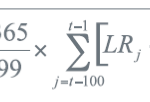
Now, this perhaps doesn’t sound much on the surface, but the products final payout is dependent on the level of calculated volatility of the underlying assets (the higher the vol the lower the payout) so the fact they use the wrong formula destroys my interest and I cannot have any faith in it. For those who are interested in this error, when calculating annualised sharemarket volatility based on daily prices you calculate the annualised figure by multiplying the daily volatility by the square root of 252 (which is the approximate number of trading days in a calendar year)…this product multiplies the daily volatility by the square root of 365 (obviously the number of days in the year) which results in an artificially inflated figure that is not at all a reflection of annual volatility…hence the marketing materials and anything else to do with this product is quite meaningless to me and should be to anyone else looking at this product. And don’t forget, the higher the vol the lower the payout and the vol is calculated incorrectly too high!

PDF Download    Send article as PDF   

Fear Creeping Up and may be appearing in Oz

August 25, 2010 Leave a comment

Source: Bloomberg

After another down day in US Equities markets we can see the VIX is starting to creep up…it increased overnight by a little more than 7% and currently stands at 27.5. If the VIX is one thing it is certainly volatile. Whilst the chart shows that over the last 12 months the VIX has moved from 24 to 27.5, it has been as high as 46 and as low as 15..so after more than halving after reaching a peak of 32 it then more than triples to 46 before more than halving again to its most recent bottom of around 21.5…what a wild ride and whilst its an indicator of fear in equity markets there would certainly be a lot of fear in buying or selling the VIX contracts.

Either way, I must say I’m looking forward to seeing an investible Australian version of the VIX indicator that will hopefully be sufficiently liquid so we can efficiently buy and sell volatility. The Australian options market, in my opinion, is still quite illiquid, so having an efficient method of taking a position on sharemarket volatility should be good. I must say, like many, I’ve had little idea about market direction but I’ve been far more confident (and accurate) in my expectations of market volatility…the Australian VIX should be, at least, fascinating and I do expect there will be a new range of structured products that will appear…and let’s hope they’re priced appropriately…well…I guess you can’t have everything.

PDF    Send article as PDF   

Structure Product Review – Instreet Link Series XIX and XXI

August 2, 2010 Leave a comment

Basic characteristics of these 2 structured products are…

  • They provide the investor with exposure to the S&P/ASX200 Share Price Index (ie no exposure to dividends)
  • They each have capped performance (Indicative caps are 28.5% for Series XIX and 47% for Series XXI)
  • The terms are 2 years for Series XIX and 3 years for Series XXI commencing 30 September 2010
  • The indicative Issue price is $1.49 per $10 unit of XIX and $2.35 per $10 unit of XXI
  • The return is a basket of 5 ASX listed stocks as it is a deferred purchase agreement (DPA) structure
  • Liquidity is quarterly or at the discretion of InStreet

Purchasing this investment (or should I say, “Derivative” or even “exotic Call Option”), is identical to…

  • Purchasing an “At The Money” call option on the S&P/ASX200 Share price index, PLUS
  • Writing (or selling) an “Out of the Money” call option on the S&P/ASX200 Share price index where the strike price is $12.80 for series XIX and $14.70 for series XXI
  • The terms of each call option contract is as per above characteristics, i.e. 2 years for Series XIX and 3 years for series XXI

Like purchasing any call option, exotic or otherwise, if the price performance of the underlying asset, ie. the S&P/ASX200, is less than zero at expiry, then the value of the investment is zero and all moneys are lost. So massive downside risk for this investment. 

So are these two products priced appropriately?

Series XIX

If we purchase an at the money call option in the market and at the same time sell a call option with a strike price at 28.5% out of the money, then using Black & Scholes option pricing means the net cost (excluding brokerage) is probably at most $1.10 per unit…this assumes an interest rate of anywhere between 5% and 6% and that volatility is the same for both call options…this means that because the investor is paying an indicative $1.49, being conservative, they are paying a premium of 35% (39cents/$1.10)…or 35% brokerage on the option contracts!

Series XXI

Using the same assumptions as series XIX except the call option sold has a strike price of $14.70 and the term is 3 years means the net cost (excluding brokerage) is probably at most $1.70…given the indicative cost is $2.35, we again have a hefty premium (or brokerage) of 38% (65 cents/$1.70).

Given 35 cents per transaction goes to adviser (20 cents or 2% of $10) and arranger (15 cents or 1.5% of $10), clearly this a product where the big winner is adviser and arranger (i.e. Instreet Investment Ltd) and someone else (I guess the options broker).

This demonstrates the massive margins that can occur within structured products and guess what…none of the pricing that I have shown above is disclosed….both adviser and investor is left ot ehir own resources to determine whether this investment is a good deal or not. So, the question is….given the Black & Scholes pricing used, do you think a 35% plus brokerage is worth paying for a capped call option position?

Create PDF    Send article as PDF   
Categories: Structured Products

Structured Products – tough to get your money back

June 22, 2010 Leave a comment

Source: Credit Suisse Global Investment Returns Yearbook 2010

The above chart shows the gross outperformance of Australian shares (including dividends) versus Australian Bonds and Bills. Over the 110 years to the end of 2009, shares provided an additional return of only 6% to 6.8% versus bonds and bills respectively.

Believe it or not, there is no other country in the world that has produced a greater equity risk premium over bonds and bills than Australia over the last 110 years…the contrarian investor is probably saying that its someone else’s turn but anyway, I digress…

…all I have to say is that given 5 to 12 year government bonds in this country are only yielding between 5% and 5.5% at the time of writing, it is an absolute disgrace that many structured products available to retail investors require the ASX 200 Accumulation Index to return double digits to cover the cost of funding!

Using this simple, but frequently used, measure for forecasting long term equity performance, if we assume the premium is likely to be 6% against bonds, then sharemarket returns will be around 11% to 11.5% over the next 5 or more years. With an expected dividend yield around 4%pa then the ASX200 Share Price Index performance will only be 7%pa…this is less than the cost of funding many of these appalling structured products (keep in mind structured products typically provide exposure to the ASX200 Share Price Index…not the accumulation index).

That’s my rant for the day.

PDF Creator    Send article as PDF   
Follow

Get every new post on this blog delivered to your Inbox.

Join other followers:

Switch to our mobile site